Introduction
Membership savings programs vary widely in structure, pricing models, and industry focus. While many platforms appear similar at first glance, their underlying savings mechanisms and category emphasis differ significantly.
Understanding the types of membership savings programs available helps consumers compare options more effectively and determine which model aligns best with their spending patterns.
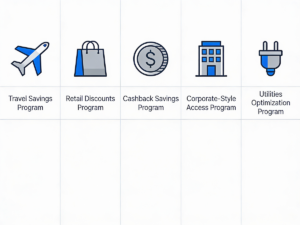
Why Classification Matters in Savings Comparison
Understanding the different types of membership savings programs is essential for structured savings comparison. Many platforms appear similar in marketing language, yet operate on fundamentally different pricing models.
Classification helps consumers:
-
Identify structural differences
-
Compare break-even requirements
-
Align program type with spending patterns
-
Avoid evaluating dissimilar models as if they were equivalent
Without clear categorization, consumers may overestimate similarities between platforms that operate on entirely different savings mechanisms.
Travel-Focused Membership Programs
Travel-focused programs concentrate primarily on hotel bookings, vacation packages, car rentals, and airline-related services.
These programs typically rely on:
-
Negotiated hotel rates
-
Wholesale travel pricing
-
Package bundling
-
Loyalty network partnerships
They tend to provide the most value for households that travel multiple times per year.
Retail Discount Networks
Retail-focused membership savings programs provide negotiated discounts across online and in-store merchants.
Common features include:
-
Partner merchant discounts
-
Category-based price reductions
-
Seasonal promotion stacking
-
Cashback integrations
Effectiveness depends on merchant participation depth and frequency of consumer purchases.
Subscription-Based Savings Models
Some membership savings programs operate as subscription access platforms, offering negotiated pricing across multiple categories through a recurring fee.
These programs typically:
-
Provide centralized member dashboards
-
Aggregate multiple vendor categories
-
Offer pricing visibility before purchase
-
Emphasize structured savings rather than promotional stacking
Their effectiveness depends heavily on usage frequency and breadth of participating vendors.
Cashback and Rebate-Based Programs
Some membership savings platforms rely primarily on cashback models rather than direct price reductions.
These programs:
-
Offer post-purchase rebates
-
Provide digital wallet credits
-
Accumulate rewards over time
Savings may be less visible at point-of-sale but accumulate gradually through consistent use.
Loyalty and Rewards-Integrated Programs
Certain savings platforms integrate with loyalty ecosystems or rewards programs rather than offering direct discount pricing.
These models may:
-
Stack rewards points
-
Offer tier-based benefits
-
Depend on accumulated credits
-
Provide deferred savings rather than instant price reductions
While these programs may appear similar to cashback models, their long-term value depends on consistent engagement.
Corporate-Style Access Programs
Corporate-style membership programs aim to extend pricing structures traditionally available only to employees of large organizations.
These programs often include:
-
Preferred vendor agreements
-
Bulk-rate access
-
Tiered pricing structures
-
Negotiated service discounts
This model emphasizes aggregated purchasing power. To better understand the mechanics behind these pricing structures, review how membership savings programs work.
Utility and Telecommunications Optimization Programs
Emerging membership savings programs now include optimization models for:
-
Electricity
-
Natural gas
-
Internet
-
Mobile services
Because these industries are often regulated, savings typically involve rate optimization rather than deep discounting. Utility pricing structures in many states are regulated by public utility commissions, which can limit how deeply rates can be discounted.
These programs may provide incremental savings rather than dramatic price reductions.
Hybrid Membership Platforms
Some membership savings programs combine multiple models, offering travel discounts, retail savings, cashback, and service optimization within a single membership structure.
Hybrid platforms increase category breadth but require careful evaluation of:
-
Fee-to-benefit alignment
-
Break-even thresholds
-
Category usability
A structured comparison using a consistent evaluation methodology helps determine which hybrid model provides measurable value.
Broader coverage does not automatically translate to greater value.
Choosing the Right Type
Selecting the appropriate type of membership savings program depends on:
-
Spending frequency
-
Category concentration
-
Geographic location
-
Willingness to calculate break-even points
No single structure is universally superior. Determining whether a particular structure delivers value ultimately depends on whether membership savings programs are worth it for your specific usage patterns. Suitability depends on alignment with actual household behavior.
Evaluating Types Using a Structured Framework
Each type of membership savings program should be evaluated using consistent criteria, including:
-
Total annual cost
-
Break-even usage requirements
-
Vendor participation depth
-
Transparency of terms
-
Category alignment
Applying a structured evaluation methodology ensures comparisons are based on measurable factors rather than marketing claims.
Market Trends in Membership Savings Programs
Membership-based pricing models have expanded alongside the growth of subscription economies. Consumers increasingly expect predictable pricing access rather than isolated promotions. Subscription-based business models have expanded significantly across industries.
Trends influencing membership savings programs include:
-
Digital aggregation platforms
-
Expanded vendor partnerships
-
Growth of bundled service ecosystems
-
Increased regulatory oversight in essential services
Understanding these trends provides context when comparing types of membership savings programs.
Conclusion
Understanding the different types of membership savings programs provides context for structured comparison. Evaluating the underlying model — rather than focusing solely on advertised discount percentages — allows consumers to make more informed decisions.
Savings Governance encourages analytical comparison across categories before enrollment.